Crossing oceans with a pet in the cabin is a feat of logistical engineering and emotional endurance. Unlike a short domestic hop, a long-haul flight (typically defined as eight hours or more) pushes the physiological and psychological limits of your animal. To successfully navigate a 12-hour journey from New York to Tokyo or London to Dubai, you must transition from being a “pet owner” to a “flight coordinator.”
This guide provides a veterinary-backed blueprint for ensuring your dog or cat doesn’t just survive the journey, but remains regulated throughout the high-altitude experience.
The Biological Toll: Altitude, Pressure, and the Pet Nervous System
Before packing a single treat, it is vital to understand what happens to a pet’s body at 35,000 feet. The aircraft cabin is pressurized, but the air is significantly thinner and drier than at sea level.
- Hydration and Respiration: Low humidity in the cabin causes rapid moisture loss through panting or breathing. For brachycephalic (short-nosed) breeds, this is a critical risk factor, as their cooling mechanism is already compromised.
- The “Vibration Stress” Response: Pets perceive the low-frequency hum and vibration of jet engines differently than humans. This constant tactile input can keep a pet in a “yellow zone” of sympathetic arousal—a state of low-level anxiety that prevents deep restorative sleep.
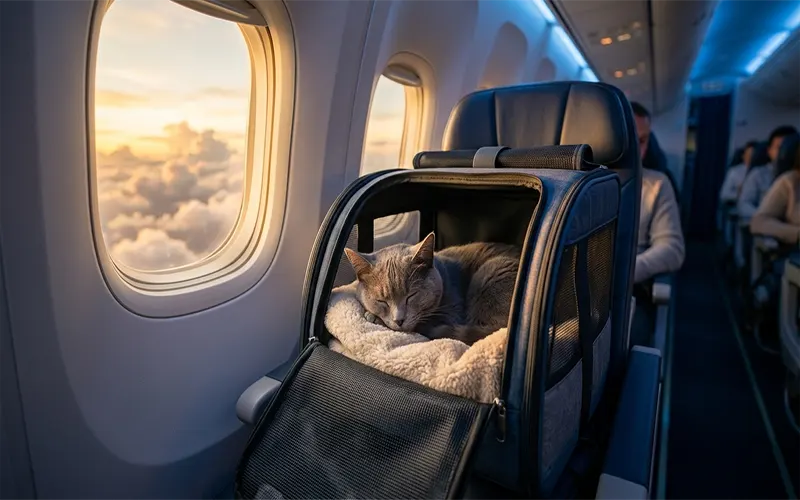
- Dogs vs. Cats: Generally, dogs look to their owners for social cues of safety. If you are calm, they are more likely to settle. Cats, however, are territorial. For them, the “territory” has shrunk to a 18×11-inch mesh bag. Their stress is often more internal, manifesting as suppressed heart rates or digestive “shutdown.”
The 30-Day Desensitization Blueprint
The biggest mistake travelers make is introducing the carrier the night before the flight. For a successful long-haul, the carrier must become a “safe harbor,” not a “trap.”
- Week 1 (Scent Integration): Place the carrier in your living room with the door open. Feed all meals inside the carrier. Place a worn T-shirt of yours inside to provide a familiar olfactory “anchor.”
- Week 2 (The Pheromone Phase): Start using synthetic pheromones like Feliway (for cats) or Adaptil (for dogs). These mimic the soothing chemicals mothers release to their young. Spray the carrier 15 minutes before your pet enters.
- Week 3 (Confinement Conditioning): Begin closing the door for increasing increments while you are in the room. Reward silence with high-value treats (dehydrated liver or Churu).
- Week 4 (Motion Simulation): Take the pet for 20-minute car rides inside the carrier. This acclimates their vestibular system to the sensation of movement without the ability to see the horizon.
The Gear Deep-Dive: Your Long-Haul Toolkit
On a long flight, your “under-seat” real estate is your pet’s entire world. Choose your gear with technical precision.
1. The “Expandable” Carrier
Look for a soft-sided carrier with three-way ventilation and “balcony” expansions. While the carrier must be tucked under the seat during takeoff and landing, many airlines allow you to unzip the side mesh during the flight (while keeping the pet inside) to give them extra room to stretch.
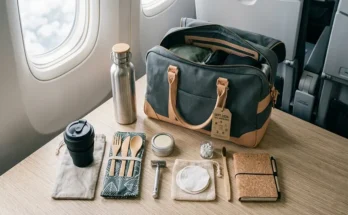
2. The Pet Go-Bag Essentials
- Collapsible Silicone Bowls: For water (offer small amounts every 2 hours).
- Calming Wipes: To wipe down paws if they get overheated or stressed.
- The Emergency Cleanup Kit: Puppy pads, biodegradable waste bags, and a small travel pack of enzyme-based odor neutralizer.
In-Flight Management Strategies
Nutrition & Hydration: The “Fast” Rule
Veterinarians generally recommend a 6-to-8-hour fast before a long-haul flight. A full stomach in a pressurized cabin can lead to nausea and bloating. However, hydration is non-negotiable. Instead of a full bowl of water which might spill, offer ice cubes or a “lickable” treat to keep their mouth moist without overfilling the bladder.
Sensory Regulation
The cabin is a barrage of light and sound.
- The Blackout Strategy: Use a thin, breathable silk scarf to cover the carrier. This creates a “den” effect, lowering the pet’s visual stimuli and reducing the “startle reflex” when flight attendants pass by.
- Pink Noise: If your pet is wearing a specialized pet-calming hood, playing low-frequency pink noise can mask the “clink” of galley carts and the roar of the engines.
Sedation vs. Supplementation
Warning: Always consult your vet 4–6 weeks prior to travel.
- Natural Aids: L-theanine and CBD can take the edge off for mildly anxious pets.
- Prescription: For high-anxiety animals, drugs like Gabapentin (for cats) or Trazodone (for dogs) are common. However, “heavy” sedation is dangerous at altitude as it can suppress breathing and prevent the pet from adjusting their posture to maintain blood flow.
Navigating the “Pet Relief” Crisis
For a 10-hour flight plus 3 hours of airport time, your pet will likely need to go.
- The Puppy Pad Trick: Take your pet (inside the carrier) into the airplane lavatory. Line the floor with a fresh puppy pad.
- The Scent Trigger: Bring a small piece of a used pad from home in a Ziploc bag. Placing this on the clean pad provides the scent “cue” your pet needs to go in a strange environment.
- Cleanliness: Always wipe down the area with a disinfectant wipe afterward out of respect for other passengers.
The Arrival Protocol: Decompression
Once you land, the “travel trauma” doesn’t end immediately. Your pet’s internal clock and cortisol levels are skewed.
- Hydration First: Offer a bowl of water with added electrolytes.
- The “Quiet Room”: Upon reaching your destination, keep the pet in a single, quiet room with their familiar carrier and bed for at least 4 hours. Do not rush them into meeting new people or exploring a loud city.
- Grounding: For dogs, a long, slow “sniffari” (a walk where they lead with their nose) helps lower cortisol and reset their nervous system to the new environment.
The Pet Flight Manifesto: 5 Golden Rules
- Label Everything: Your carrier should have “Live Animal” stickers and your contact info in the destination’s local language.
- Never Under-seat a Wet Pet: Ensure your pet is bone-dry before boarding to prevent chills from cabin A/C.
- Temperature Check: If you feel cold, your pet (near the floor) is freezing. Use a self-warming pet mat.
- Zip-Tie Security: Use a small carabiner or zip-tie to “lock” the carrier zippers; pets have been known to “paw-open” zippers during turbulence.
- Trust the Fast: A hungry pet is a safer traveler than a nauseous one.
Traveling long-haul with a pet is an exercise in empathy. By preparing their “den,” managing their sensory intake, and respecting their biological limits, you turn a stressful ordeal into a manageable journey. Remember: your pet’s nervous system mirrors your own. If you stay regulated, they will follow your lead.