In 2026, the aviation industry remains one of the most challenging sectors to decarbonize, but the waste generated within the cabin is a problem we can tackle individually. On a single long-haul flight, the average passenger generates roughly 1.43kg of waste. Multiplied by a 300-person aircraft on a 12-hour journey, that equals nearly half a tonne of trash—composed mostly of single-use plastic cups, poly-wrapped blankets, and non-recyclable meal trays.
Creating a zero-waste carry-on kit isn’t just about being “eco-friendly”; it’s about reclaiming your comfort and autonomy. By opting out of the airline’s disposable loop, you ensure that your travel footprint doesn’t linger for centuries in a landfill. Here is the tactical blueprint for a plastic-free journey.
1. The Hydration Strategy: Beyond the Plastic Cup
The most frequent “trash event” on a flight is the beverage service. Every tiny plastic cup used for a sip of water adds up.
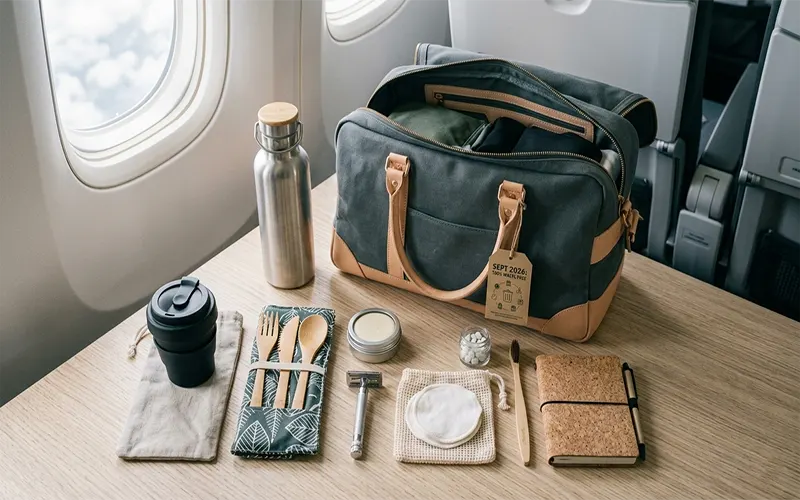
- The Vessel: Bring a high-quality, vacuum-insulated stainless steel bottle. While glass is sustainable, steel is lighter and more durable for travel.
- The Security Loophole: Your bottle must be empty to pass through security. Once airside, skip the expensive bottled water and find a “hydration station.” In 2026, most major international hubs have installed high-filtration taps.
- The Filtration Backup: If you are traveling to a destination where tap water quality is uncertain, choose a bottle with an integrated carbon or UV-C filter. This allows you to refill at any tap during your layover without needing to buy a single-use plastic bottle.
2. The Solid-State Revolution: Toiletries 2.0
The “3-1-1” liquids rule is the primary driver of travel-sized plastic waste. By switching to solid-state toiletries, you eliminate the need for plastic bottles entirely and save space in your liquids bag for things that truly must be fluid.
- Personal Hygiene: Switch to toothpaste tablets stored in a small tin, a cardboard-tube deodorant, and a bamboo toothbrush.
- The Refreshing Spray (DIY Recipe): Instead of buying a plastic-bottled face mist, make your own in a 30ml glass spray bottle:
- 25ml Distilled water (or alcohol-free witch hazel)
- 2 drops Peppermint essential oil (for cooling)
- 2 drops Lavender essential oil (for nervous system regulation)
- Moisture: Use a solid lotion bar or a small tin of organic shea butter. These won’t leak in your bag and provide a much deeper barrier against the dry 10% humidity of the cabin air.
3. Zero-Waste Dining at 35,000 Feet
Airline meals are a “waste-stack”: a plastic tray, covered in plastic film, holding plastic cups and plastic-wrapped plastic cutlery. Breaking this cycle requires a two-pronged approach.
The “Opt-Out” Power Move
Most airlines allow you to decline a meal. If you pack your own nutrient-dense, package-free snacks, you save yourself from high-sodium processed food and the associated trash.
- The Snacks: Use beeswax wraps or silicone bags for bulk-bin nuts, dried mango, or homemade protein bars.
- The Container: Bring a lightweight titanium or silicone collapsible bento box. This serves as your plate if you do decide to accept part of the meal (e.g., asking the attendant to put a roll or fruit directly into your container).
The Cutlery Roll
Never rely on the plastic fork that snaps under pressure. A small cloth “Cutlery Roll” containing a bamboo or titanium fork, spoon, and a glass or stainless steel straw is a game-changer.
- Pro Tip: Avoid bringing a metal knife; even if it’s dull, security in some regions may confiscate it. A bamboo knife is usually the safest bet for global travel.
4. The Comfort Layer: Sustainable Fibers
The blankets and pillows provided on long-haul flights are almost exclusively made of synthetic polyester and are laundered with harsh chemicals before being sealed in—you guessed it—plastic bags.
- The Organic Alternative: Pack a large scarf or “travel wrap” made of organic cotton, Tencel, or Merino wool. These natural fibers are more breathable, keep you warmer than synthetics, and don’t shed microplastics in the wash.
- The Pillow: Instead of a foam neck pillow, use a “stuffed” pillowcase. You can fill a small organic cotton pillowcase with your extra sweater or down jacket. This saves space and provides a plastic-free headrest.
5. Zero-Waste Swaps Comparison
| Item | The “Traditional” Waste | The Zero-Waste Swap |
| Water | 5-10 Plastic Cups / Bottles | Stainless Steel Insulated Bottle |
| Utensils | Plastic-wrapped set | Bamboo or Titanium Cutlery Roll |
| Headphones | Plastic-wrapped disposables | Personal Bluetooth Adapter + Own Headphones |
| Toothpaste | Travel-sized plastic tube | Toothpaste Tablets in a tin |
| Tickets | Paper Boarding Pass | Digital Wallet / Biometric Entry |
6. The Digital Tech Kit
Waste isn’t always physical; it’s also the resources used to create temporary items.
- E-Sims: Skip the plastic SIM card and the cardboard packaging. Use an E-Sim provider to have your data ready the moment you land.
- Offline Entertainment: Download your books, podcasts, and movies before you fly. This eliminates the need for printed magazines and the waste of the disposable headphone covers provided by the airline.
7. The “Leave No Trace” Landing Checklist
Before the “Prepare for Landing” announcement, do a quick sweep of your seat area:
- Pack It Out: If you did end up with a small piece of trash (like a snack wrapper), don’t leave it in the seat pocket. Place it in your own small “trash pouch” to dispose of in a proper recycling bin at the airport.
- Headphones: If you used the airline’s entertainment system with your own adapter, ensure no cables are left behind.
- Reset: Fold your personal blanket and stow your kit. Leaving a clean seat area helps the cleaning crew turn the plane faster, reducing the energy consumption of the aircraft on the ground.
The transition to a zero-waste carry-on is a journey of “elegant minimalism.” It forces you to choose higher-quality items that last longer and perform better. When you sit down for a 12-hour flight with your own water, your own snacks, and your own sustainable comfort items, you aren’t just saving the planet from half a kilogram of plastic—you are significantly upgrading your own travel experience.