For the modern traveler, a long-haul flight is more than just a logistical hurdle; it is a physiological siege. While we often focus on the inconvenience of legroom or the quality of in-flight entertainment, our nervous systems are processing a rapid-fire sequence of stressors: fluctuating cabin pressure, artificial light cycles, low-frequency engine hum, and the invisible tax of high-altitude radiation.
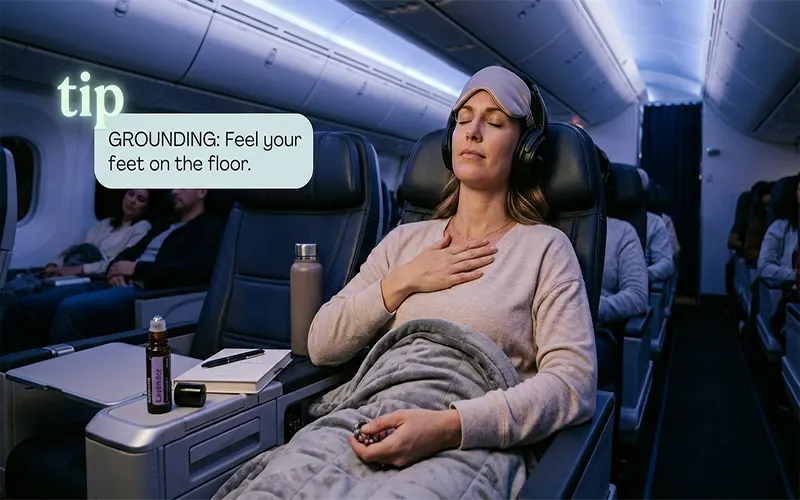
To step off a plane feeling integrated rather than decimated, we must move beyond basic “travel tips” and enter the realm of neurowellness. By applying the principles of Polyvagal Theory and somatic regulation, we can transition from a state of sympathetic “high alert” back into a regulated, parasympathetic flow—even at 35,000 feet.
The Science of Flight Stress: Why You Feel “Wired and Tired”
The “jet lag” we feel isn’t just a lack of sleep; it’s a systemic biological disorientation. When we fly, our bodies are subjected to an environment they never evolved to inhabit.
- Hypoxia and the Amygdala: Airplane cabins are typically pressurized to an equivalent of 6,000–8,000 feet. This slight drop in oxygen saturation can trigger the amygdala—the brain’s fear center—putting the body in a subtle but constant state of sympathetic arousal.
- The Circadian Mismatch: Crossing time zones disrupts the suprachiasmatic nucleus (SCN) in the brain. This doesn’t just affect sleep; it disrupts the rhythmic release of cortisol and melatonin, leaving your nervous system “out of sync” with its environment.
- Vibrational Stress: The constant low-frequency noise and vibration of the aircraft act as a persistent stressor on the vestibular system, contributing to a sense of “sensory overwhelm.”
Pre-Flight Priming: Loading the System
Regulating your nervous system begins 24 hours before you scan your boarding pass. Think of this as “nervous system loading.”
- Magnesium Loading: Magnesium is the ultimate neurological “brake pedal.” Supplementing with Magnesium Glycinate or Malate the day before travel supports GABA production, the neurotransmitter responsible for calming neural activity.
- Cold Exposure: A deliberate cold shower on the morning of your flight stimulates the vagus nerve. This “hormetic stress” increases your resilience, making your nervous system more robust against the minor irritations of travel.
- Precision Hydration: Dehydration leads to increased blood viscosity, which forces the heart to work harder and elevates the heart rate—a physical signal that tells the brain to stay in “fight or flight.” Focus on electrolytes (sodium, potassium, and magnesium) rather than just plain water to ensure cellular signaling remains crisp.
In-Flight Regulation Pillars
Once you are in the air, your goal is to minimize sensory “insults” and actively signal safety to your brain.
1. Vagal Tone Hacks
The vagus nerve is the information superhighway of the parasympathetic nervous system. You can manually “hack” it using these techniques:
- The 4-7-8 Breath: Inhale for 4 seconds, hold for 7, and exhale for 8. The prolonged exhalation stimulates the vagus nerve, sending an immediate “all clear” signal to the brainstem.
- Ocular Pressure: Gently pressing on your closed eyeballs for 15–30 seconds triggers the oculocardiac reflex, which naturally slows the heart rate.
- Vocal Resonance: Humming or “Voo-ing” (making a deep ‘voooo’ sound on the exhale) creates internal vibrations that stimulate the vagus nerve endings in the throat and chest.
2. Somatic Movement
Physical stagnation leads to neurological stagnation. If the body doesn’t move, the nervous system can begin to feel “trapped.”
- Ankle Pumps and Isometrics: Flexing and extending the ankles helps venous return, but adding isometric contractions (squeezing your glutes or core for 5 seconds and releasing) helps discharge the restless energy of the sympathetic nervous system.
- The “Seated Cat-Cow”: Subtle spinal undulations help move cerebrospinal fluid and prevent the “stiff-brain” feeling that comes from prolonged sitting.
3. Sensory Deprivation & Protection
The airplane cabin is a sensory nightmare of blue light and white noise. Protecting your “sensory gates” is vital.
- Frequency Management: Use noise-canceling headphones, but instead of silence, play Pink Noise or Brown Noise. These lower frequencies are more soothing to the nervous system than the sharp, artificial frequencies of cabin announcements.
- Blue Light Mitigation: Wear amber-tinted glasses the moment you board. Artificial blue light at high altitudes suppresses melatonin more aggressively than on the ground, shattering your circadian rhythm before you even land.
The “Neurowellness Kit”: Essential Tools
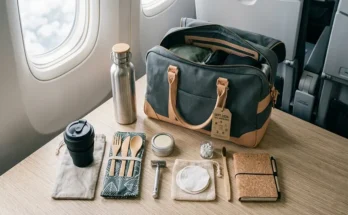
To effectively regulate, you need a curated toolkit that addresses the body’s sensory needs.
| Tool | Purpose | Neurological Benefit |
| Silk Weighted Eye Mask | Gentle pressure on the face | Activates the “calm-and-connect” system via deep touch pressure. |
| Liposomal Melatonin | Circadian realignment | Lowers core body temperature and signals the brain it’s time to repair. |
| Nasal Oil/Saline | Mucosal hydration | Prevents the “dry nose” trigger that can lead to mouth breathing and sympathetic arousal. |
| Acoustic Earplugs | Sound dampening | Reduces the “alarm response” to sudden cabin noises while allowing for conversation. |
Post-Flight Integration: The “Soft Landing”
The work isn’t done when you exit the jet bridge. Your nervous system is still vibrating at the frequency of the flight.
- Immediate Grounding: If possible, get your bare feet on actual earth (grass or sand) for 15 minutes. This helps discharge static electricity and resets your body’s electrical bio-field.
- The 20-Minute “Legs Up The Wall” (Viparita Karani): Once at your hotel or home, lie on your back with your legs resting vertically against a wall. This position reverses blood flow and triggers a massive parasympathetic shift, telling your body it is finally safe to rest.
- View the Sunset/Sunrise: Seeing the low-angle sun (even through clouds) signals the SCN to reset your internal clock, providing a neurological “anchor” in your new time zone.
Summary Table: Quick Calms for In-Flight Panic
If you feel a spike of anxiety or restlessness during the flight, use this hierarchy:
| State | Action | Duration |
| Panicked / Heart Racing | Ocular Pressure (Press eyes) | 30 Seconds |
| Irritated / Restless | Box Breathing (4-4-4-4) | 3 Minutes |
| Brain Fog / Drained | Cold water on face/wrists | Immediate |
| Cannot Sleep | Magnesium + Pink Noise | Continuous |
Long-haul travel doesn’t have to be a biological tax you pay for adventure. By viewing the flight through the lens of neurowellness, you stop being a passive victim of the environment and start becoming an active regulator of your own physiology. When you prioritize your nervous system, you don’t just arrive at your destination—you arrive as yourself.