The Zero-Waste Carry-On: How to Pack a Sustainable Long-Haul Flight Kit

The Zero-Waste Carry-On: How to Pack a Sustainable Long-Haul Flight Kit

In 2026, the aviation industry remains one of the most challenging sectors to decarbonize, but the waste generated within the cabin is a problem we can tackle individually. On a single long-haul flight, the average passenger generates roughly 1.43kg of waste. Multiplied by a 300-person aircraft on a 12-hour journey, that equals nearly half a tonne of trash—composed mostly of single-use plastic cups, poly-wrapped blankets, and non-recyclable meal trays.

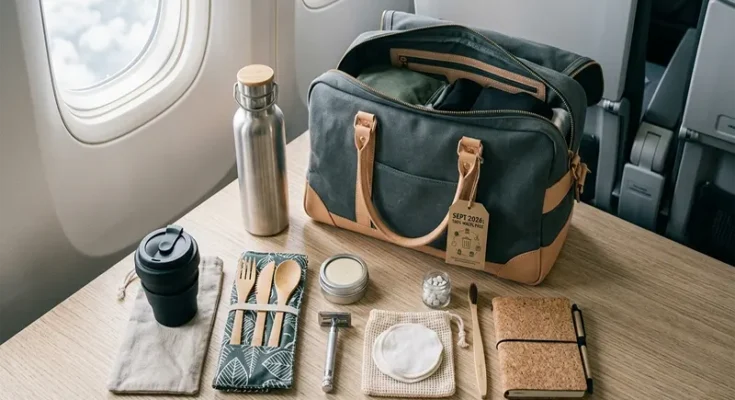
Creating a zero-waste carry-on kit isn’t just about being “eco-friendly”; it’s about reclaiming your comfort and autonomy. By opting out of the airline’s disposable loop, you ensure that your travel footprint doesn’t linger for centuries in a landfill. Here is the tactical blueprint for a plastic-free journey.

1. The Hydration Strategy: Beyond the Plastic Cup

The most frequent “trash event” on a flight is the beverage service. Every tiny plastic cup used for a sip of water adds up.

  • The Vessel:
The Zero-Waste Carry-On: How to Pack a Sustainable Long-Haul Flight Kit Read More
Maximizing Your 2026 Travel Budget: The September Shoulder Season Strategy

Maximizing Your 2026 Travel Budget: The September Shoulder Season Strategy

In the world of travel, timing is not just a preference; it is a financial lever. As we navigate the economic and climatic shifts of 2026, the traditional “summer vacation” has become a gauntlet of “heat domes,” overcrowded landmarks, and hyper-inflated pricing. For the savvy traveler, the solution lies in the September Shoulder Season Strategy.

By shifting your departure date by just 14 to 21 days—moving from late August to mid-September—you can effectively double the purchasing power of your travel budget while enjoying superior environmental conditions. This is the “Golden Window” where luxury becomes accessible, and the “Slow Travel” philosophy yields its highest dividends.

1. The “Post-August Pivot”: 2026 Economics

The economics of September travel are driven by the “Post-August Pivot.” In both the US and Europe, the first week of September marks a hard transition in consumer demand. As the academic year resumes and corporate “Q4 planning” begins, …

Maximizing Your 2026 Travel Budget: The September Shoulder Season Strategy Read More
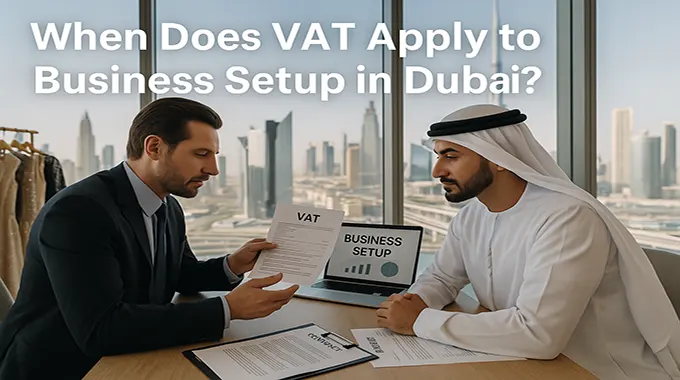
When does VAT apply to Business Set up in Dubai?

When does VAT apply to Business Set up in Dubai?

Starting a business set up in Dubai involves a spectrum of legal, administrative, and financial considerations. Among these, understanding Value Added Tax (VAT) is crucial for ensuring compliance from day one. Implemented in the UAE on January 1, 2018, VAT is an indirect tax applied to most goods and services, and its implications for new and existing businesses in Dubai are significant, requiring careful attention to registration thresholds, compliance obligations, and operational adjustments.

Overview

  • VAT in the UAE is a consumption tax introduced on January 1, 2018, at a standard rate of 5%.
  • Businesses engaged in taxable supplies must register for VAT if their taxable supplies and imports exceed AED 375,000 annually.
  • Voluntary VAT registration is possible for businesses exceeding AED 187,500 in taxable supplies and imports.
  • Free zone businesses are generally subject to VAT, though specific ‘designated zones’ can offer certain VAT benefits for goods movement.
  • VAT impacts invoicing,
When does VAT apply to Business Set up in Dubai? Read More
Advanced Biohacking: Molecular and Biological Hacks to Eliminate Jet Lag

Advanced Biohacking: Molecular and Biological Hacks to Eliminate Jet Lag

In the high-performance world of 2026, the concept of “jet lag” is no longer viewed as an inevitable side effect of travel, but as a temporary state of circadian dysregulation that can be systematically corrected. To the elite traveler, a long-haul flight is a series of environmental “insults”—cosmic radiation, recycled air, and artificial light—that desynchronize the body’s internal timing.

Eliminating jet lag requires more than just sleeping on the plane; it requires a targeted intervention into the molecular mechanisms that govern our biological clocks.

1. The Biological Mechanism: The SCN and Peripheral Clocks

The human body is not governed by one single clock, but by a hierarchy of timekeepers. At the apex is the Suprachiasmatic Nucleus (SCN), located in the hypothalamus. The SCN is the “Master Clock,” primarily entrained by light entering the retinas.

However, every major organ—the liver, gut, and kidneys—possesses its own peripheral clock. Jet lag …

Advanced Biohacking: Molecular and Biological Hacks to Eliminate Jet Lag Read More
How to Align Travel Budget Planning with Corporate Carbon Allowance Goals

How to Align Travel Budget Planning with Corporate Carbon Allowance Goals

For decades, corporate travel management was governed by a single metric: the bottom line. Success was defined by negotiated airline discounts and hotel room rates. However, as we move through 2026, a new constraint has entered the boardroom. Driven by the “Fit for 55” legislation in Europe and similar SEC-adjacent reporting mandates in the US, the CFO and the Chief Sustainability Officer (CSO) are now co-authoring travel policies.

The result is Dual-Constraint Planning. In this framework, every business trip must fit within two distinct “wallets”: the financial budget and the carbon allowance. To succeed, organizations must move beyond the era of passive carbon offsetting and into the era of active carbon intelligence.

1. The “Green Budget” Framework

The shift to a carbon-aligned budget requires treating $CO_2e$ (carbon dioxide equivalent) as a secondary currency. If a department has a $100,000 travel budget but has already exhausted its 50-tonne carbon allowance, …

How to Align Travel Budget Planning with Corporate Carbon Allowance Goals Read More